


12/03/2025
At COP-30 in Belém, the urgency to accelerate climate action was evident. Among these, a just transition and the phase-out of fossil fuels were central points of discussion, even though they were ultimately excluded from the final text because of opposition from oil and fossil fuel producers.
This context underscores the need for transformation, technological innovation, renewable feedstocks, and coordinated action across value chains in the chemical sector. This sector plays a significant role in global emissions and faces many challenges to achieve ambitious decarbonization goals. In this article, I explore how biomaterials and renewable chemicals support this shift toward a low-carbon, resilient future.
Transforming the Chemical Industry for a Low-Carbon Future
In 2020, the chemical industry accounted for 14% of global oil consumption and 9% of global gas consumption. It also generated 13% of global industrial direct CO₂ emissions (Martín, 2025; Chung et al., 2023; Gabrielli et al., 2023; Meng et al., 2023). When downstream use-phase emissions are included, the industry accounts for 45% of global greenhouse gas (GHG) emissions (World Economic Forum, 2023). These figures underscore a critical reality that cannot be overlooked: substantial reductions in the use of resources from this sector could result in a notable decrease in global emissions, reaching up to 39% (World Economic Forum, 2023).
However, this challenge is unique to this sector since the carbon molecule forms the backbone of chemical compounds, requiring solutions that go beyond mere emission reduction. While the industry cannot simply eliminate it entirely, there are strategies that can be implemented to address this issue. Instead, the Royal Society (2023) emphasizes two key and complementary pathways:
• Decarbonization: The process of reducing GHG emissions associated with industrial operations, primarily by improving energy efficiency, adopting electrification, and transitioning to low-carbon energy sources.
• Defossilization: Replacing fossil-derived raw materials with renewable or alternative carbon sources, such as biomass or recycled carbon, for reducing environmental impact. This approach fulfills the fundamental requirement for carbon in chemical structures while reducing dependence on fossil resources and minimizing the overall carbon footprint.
This shift aligns with the objectives of the Paris Agreement, which recognizes in Articles 7 and 10 that climate adaptation, resilience, and technology innovation must be global, cooperative, and transformative. While the Agreement focuses on national governments, I see the private sector as an essential agent in operationalizing these principles. For instance, fostering innovation is consistent with the long-term vision outlined in Article 10. This vision underscores the significance of developing and advancing technologies that strengthen climate resilience and reduce emissions. The Agreement also emphasizes that accelerating innovation is essential for an effective global climate response, an idea that resonates strongly with our work on renewable chemicals and our focus on low-carbon solutions (Paris Agreements, 2015).
Biomaterials, particularly plant-based renewable chemicals, are fundamental to industrial defossilization because they utilize carbon already circulating within the biosphere. Through process of photosynthesis, plants absorb atmospheric CO₂ and convert it into biogenic carbon, a renewable feedstock that can be applied in industry for chemical production. When incorporated into industrial processes, these feedstocks help reduce dependence on fossil carbon and support climate mitigation by (i) enhancing carbon sequestration within agricultural systems (ii) substituting fossil-derived sources for biogenic carbon and (iii) keeping the carbon embodied in the product throughout its life cycle.
This means renewable chemicals can reduce emissions without compromising performance or functionality. According to the World Economic Forum (2023), bio-based innovations play a key role in promoting circularity and can substantially reduce both production-related and downstream emissions. As global markets evolve and regulatory pressures increase, renewable feedstocks offer not only an environmental solution but also a strategic advantage.
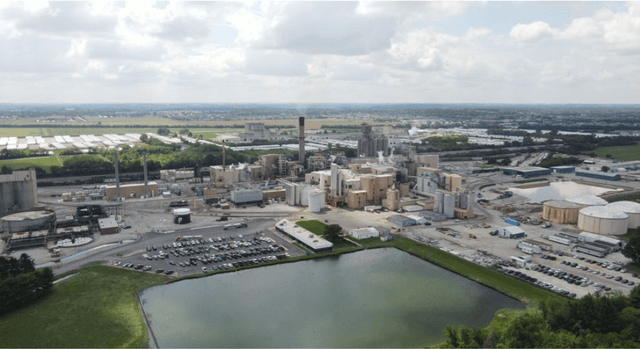
Long before Sustainea’s formal establishment in 2022, we have been developing technologies to decarbonize and defossilize the production of Bio-MEG and Bio-MPG. Our selection of corn-based dextrose as a primary feedstock was driven by both technical and sustainability considerations, aligning with our commitment to fostering resilient agricultural value chains.
We ground every technological decision in rigorous environmental science. Life Cycle Assessment (LCA) has been a key component of our R&D strategy, offering a quantitative assessment of the potential environmental impacts associated with each pathway. This has enabled us to develop a comprehensive decarbonization plan that is strategically aligned with our short, medium, and long-term objectives. After conducting a thorough evaluation, we have confirmed that our Bio-MEG has the potential to significantly reduce our carbon footprint in comparison to fossil-based MEG.
These results show that renewable chemicals can deliver robust technical performance while reducing the climate impact of downstream sectors like packaging and textiles. In other words, bio-based drop in solutions, like Sustainea´s, are not future promises; they are present realities, ready to scale.
Sources:
- C. Chung, J. Kim, B.K. Socacoo, S. Griffiths, M. Bazilian, M. Yang. Decarbonizing the chemical industry: a systematic review of sociotechnical systems, technological innovations, and policy options Energy Res. Soc. Sci., 96 (2023), Article 102955
- F. Meng, A. Wagner, A. Kremer, D. Kanazawa, J.J. leung, P. Goult, P. Guan, S. hermann, E. Speelman, P. Sauter, S. Lingeswaran, M.M. Stuchtey, K. hansem, R. Masanet, A. Serrenho, N. Ishii, Y. Kikuchi, J.M. Cullen, et al. Planet-compatible pathways for transitioning the chemical industry PNAS, 120 (8) (2023), Article e2218294120
- M. Martín. Towards a sustainable and defossilized chemical and process industry. Computers & Chemical Engineering. Vol 201, 2025.
- P. Gabrielli, L. Rosa, M. Gazzani, R. Meys, A. Bardow, M. Mazzotti, G. Sansavini Net-zero emissions chemical industry in a world of limited resources. One Earth (2023).
- The Royal Society. (2023). Defossilising the chemical industry. Retrieved from https://royalsociety.org/news-resources/projects/defossilising-chemicals/
- United Nations Brazil. (2020). Acordo de Paris. Retrieved from https://brasil.un.org/sites/default/files/2020-08/Acordo-de-Paris.pdf
- World Economic Forum. (2023, March). How the chemicals industry can help build a low-carbon economy. Retrieved from https://www.weforum.org/stories/2023/03/chemicals-industry-low-carbon-economy/